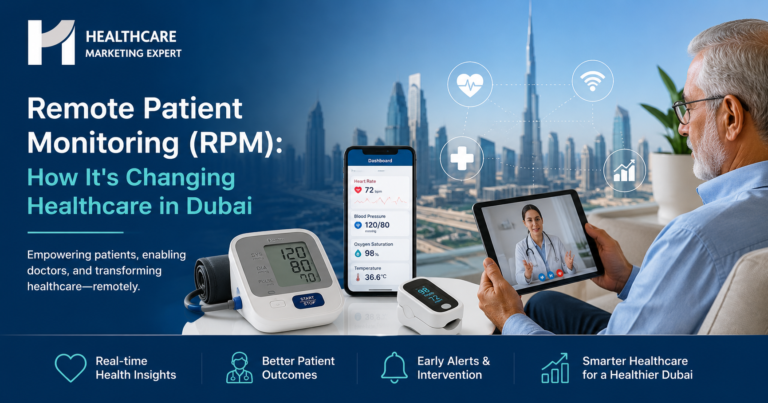
Remote Patient Monitoring (RPM) lets doctors track a patient’s health from far away using simple digital devices. In Dubai, RPM helps people manage chronic illness, recover from surgery, and get fast care without extra hospital trips. It is a growing part of digital health across the UAE.
Remote Patient Monitoring is changing how Dubai treats patients. Doctors can now check blood pressure, heart rate, and blood sugar without an office visit. This saves time for patients. It also helps doctors catch problems early. As a result, remote patient monitoring Dubai programs are becoming a normal part of everyday care, not just a future idea. Dubai’s clinics are using RPM as part of a bigger shift toward digital health across the UAE.
What Is Remote Patient Monitoring?
Remote Patient Monitoring, or RPM, tracks a patient’s health from home. Small devices collect data like heart rate, blood pressure, or blood sugar. Then, the devices send this data straight to a doctor. Because of this, doctors can act fast, even when the patient is not in the clinic. In short, RPM brings the exam room to the patient’s home. This is helpful for busy families, older adults, and anyone managing a long-term health condition.
How Remote Patient Monitoring Works
RPM combines simple devices with smart software. Together, they connect patients and doctors in real time. Here is what makes it work:
- Wearable devices: Smartwatches and sensors track heart rate, oxygen levels, and daily activity.
- Home monitoring kits: Blood pressure cuffs and glucose meters record daily readings.
- Mobile apps: Apps send device data to the care team automatically.
- Secure data platforms: Cloud systems store and protect patient health data.
Because these tools work together, doctors see clear, accurate health data every single day. This helps them understand what is happening, why it matters, and how to respond quickly. For example, if a patient’s blood pressure spikes, the care team can act before it becomes an emergency. Similarly, if a glucose reading drops too low, the care team can reach out right away with clear next steps.
Step-by-Step: How Patients Start Using RPM
Getting started with RPM is simple. Most programs in Dubai follow the same basic steps:
- Doctor recommendation: A doctor decides if RPM fits the patient’s needs.
- Device setup: The patient receives a device and simple, easy training.
- Daily monitoring: The device records health data automatically each day.
- Data review: The care team checks the data and watches for warning signs.
- Care plan update: The doctor adjusts treatment based on the results.
Overall, this process keeps care personal, even from a distance. Patients do not need special skills. Most devices are ready to use right out of the box. Additionally, most care teams stay reachable by phone or app, so patients never feel left on their own.
Common Conditions RPM Helps Manage
RPM works well for many health needs. Specifically, it helps patients who live with:
- Diabetes: Daily blood sugar tracking helps patients avoid dangerous highs and lows.
- High blood pressure: Regular readings help doctors adjust medication before a crisis happens.
- Heart conditions: Heart rate and rhythm checks help catch irregular patterns early.
- Post-surgery recovery: Wound and vital sign monitoring helps doctors spot infection risks fast.
- Weight and lifestyle goals: Activity tracking helps patients build healthier daily habits.
Because these conditions need steady attention, RPM gives patients and doctors a clear, ongoing picture of progress. This is especially helpful in Dubai, where busy schedules can make frequent clinic visits hard to manage.
Benefits of Remote Patient Monitoring for Dubai Patients
RPM offers real value for patients and healthcare providers alike. The key benefits include:
- Fewer hospital visits: Patients skip routine trips for simple checkups.
- Early problem detection: Doctors spot warning signs before they turn serious.
- Better chronic care: People with diabetes or high blood pressure get steady, ongoing support.
- More convenience: Patients track their health from home, at any time of day.
- Stronger patient engagement: People take a more active role in their own care.
- Lower long-term costs: Fewer emergency visits often mean lower healthcare spending.
In short, RPM makes healthcare more efficient. At the same time, it keeps care personal and focused on each patient. Over time, these small daily benefits add up to healthier patients and stronger doctor-patient relationships.
Challenges of Remote Patient Monitoring, and How Dubai Clinics Solve Them
RPM is not perfect. Like any new technology, it comes with real challenges. However, Dubai’s healthcare providers are solving these issues step by step:
- Data privacy: Clinics use encrypted, secure platforms to protect patient information.
- Patient training: Care teams offer simple, hands-on device training for every patient.
- Device access: More providers now offer low-cost or insurance-supported devices.
- Data overload: Smart software filters data, so doctors focus only on real warning signs.
Because clinics address these issues directly, patients can trust RPM as a safe, reliable part of their care. As more clinics adopt these solutions, the overall experience keeps getting smoother for both patients and providers.
The Role of AI in Remote Patient Monitoring
Artificial intelligence plays a growing role in RPM. Instead of a person checking every data point by hand, smart software scans the numbers first. Then, it flags only the readings that truly need attention.
This matters because doctors handle many patients at once. Without help, it would be hard to review every reading manually. With AI support, however, care teams can focus their time where it counts most. As a result, patients get faster responses when something looks wrong. At the same time, doctors avoid burnout from constant manual checks.
Why Digital Health Is Growing in the UAE
Digital health is a top priority across the UAE. Government leaders and hospitals continue to invest in smart healthcare tools. RPM fits well into this larger goal. Additionally, more clinics are combining RPM with telehealth, mobile apps, and AI-based tools. Consequently, digital health UAE growth is not slowing down anytime soon.
For clinics, this shift also creates a real need for smart healthcare technology marketing. Patients need clear, honest information before they trust and use new tools. Because of this, clinics that explain RPM in simple language build stronger, longer-lasting patient relationships.
Furthermore, patients in Dubai come from many different backgrounds and speak many different languages. Therefore, clear communication becomes even more important. Clinics that invest in simple, honest patient education tend to see higher trust and better long-term results. In turn, this builds a stronger reputation for the clinic across the wider community.
Frequently Asked Questions
Is Remote Patient Monitoring safe?
Yes. RPM uses encrypted platforms to protect patient data. Only approved healthcare staff can view the information.
Who can use RPM in Dubai?
Most patients with chronic conditions, or those recovering from surgery, can use RPM. A doctor will confirm if it fits your specific needs.
Does insurance cover RPM in the UAE?
Coverage depends on the insurance provider and health plan. Patients should check directly with their insurer for details.
What devices are used in RPM?
Common devices include blood pressure cuffs, glucose monitors, pulse oximeters, and smartwatches.
Can RPM fully replace doctor visits?
No. RPM supports regular care. However, it does not replace in-person visits when a patient needs hands-on treatment.
How is RPM different from a regular checkup?
A regular checkup happens once in a while. RPM, on the other hand, tracks health data every day. This means doctors catch changes much faster.
Is Remote Patient Monitoring only for older patients?
No. RPM helps patients of all ages, including younger people managing chronic conditions or recovering from surgery.
Grow Your Clinic With Smart Digital Health Marketing
Remote Patient Monitoring in Dubai works best when patients understand and trust it. Healthcare Marketing Expert is a specialist healthcare marketing agency in Dubai that helps clinics explain new health technology in a simple, honest way. We connect traditional healthcare marketing with the digital health innovation shaping the UAE today.
If you want to grow your clinic in 2026, read our full guide: Grow Your Clinic in the UAE: 2026 Marketing Guide. We also believe strong patient relationships start with people, not just procedures. Learn more in Nurturing People Before Patients.
Together, these ideas can help your clinic lead the shift toward the kind of digital health the UAE has been waiting for. Reach out today, and let’s build a marketing plan that matches the pace of your patients’ changing needs.