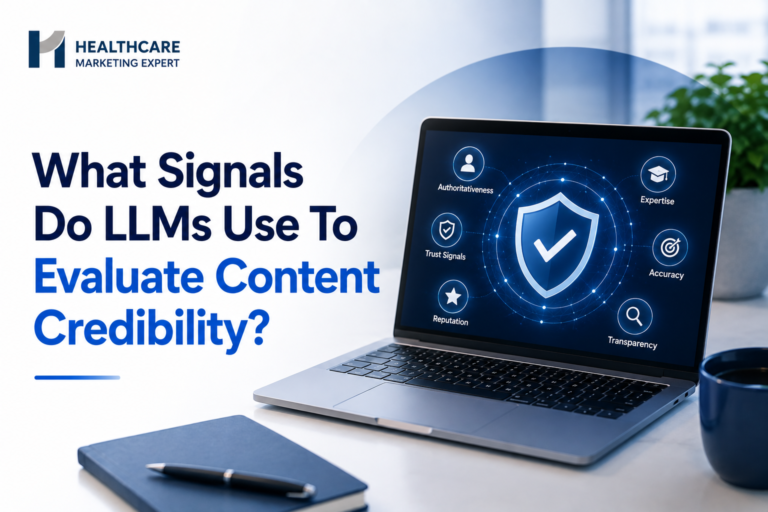
LLMs judge content credibility by checking facts, author expertise, source citations, and content structure. They trust text that matches other reliable sources on the same topic. Content that is clear, honest, and well organized earns more trust from AI systems.
AI tools like ChatGPT, Gemini, and Perplexity read millions of pages every day. They must pick the best answer to show users. But how do these systems decide what to trust? This article explains the real signals LLMs use to judge content. You will also learn simple steps to make your content more trustworthy.
What Is Content Credibility For LLMs?
Content credibility means how much an AI system trusts your text. It is not about keywords. It is about proof and honesty. When content passes these checks, AI tools may quote it or link to it. Credibility is the base of AI trust. Without it, good content may get ignored. So, every brand should make credibility a top goal.
How LLMs Check Content Credibility
LLMs do not use just one signal. They mix many small signals together. Strong content checks many boxes at once. Here are the main signals these systems use.
Clear Author Information
First, LLMs look for a real name. They check the writer’s job too. A doctor writing about health carries more weight than an unnamed writer. So, list clear author bios on your pages. A short line about the writer’s experience adds trust. This matters most for health, law, and money topics.
Fact Accuracy
Next, LLMs cross-check facts across many websites. If your numbers match other trusted sources, your content earns more trust. However, wrong facts can hurt your credibility fast. So, always double-check your data before you publish. In fact, even one wrong statistic can lower trust across your entire page. Therefore, careful research is always worth the extra time.
Source Citations
Additionally, content that links to studies, reports, or official pages earns more trust. AI systems treat these links as proof. In other words, citations act like evidence in a court case. Without them, claims look weak.
Content Structure
Furthermore, AI systems prefer content with clear headings. They also favor short paragraphs and bullet points. This structure makes it easy for AI to pull out facts quickly. Meanwhile, long blocks of text are harder to scan and extract.
Website Trust Signals
Also, domain age, site security, and overall reputation matter. LLMs often favor established websites over brand-new ones. Still, new websites can build trust over time with consistent, honest content. Meanwhile, simple steps like using HTTPS and keeping your site fast also help. These small technical details show AI systems that your brand takes quality seriously.
Consistency Across The Web
Moreover, if many trusted sites repeat the same fact, AI tools trust it more. This process is called corroboration. Consistent information across many sources builds strong, lasting credibility. On the other hand, information that appears only on one obscure page often gets less trust from AI systems.
User Engagement Signals
Finally, some AI systems study how real users respond to content. High-quality content tends to get more shares, links, and mentions online. As a result, engagement can indirectly boost trust signals over time.
Step-by-Step Guide To Improve Content Credibility For LLMs
Now that you know the signals, here is how to apply them. Follow these steps in order for the best results.
Step One: Add A Clear Author Bio
First, include the writer’s name and area of expertise. Also, add a short line about their background. This simple step helps AI systems trust the source right away. In addition, link the author name to a full bio page whenever possible.
Step Two: Use Verified Facts Only
Next, check every number, date, and quote before you publish. Use trusted sources like government sites, official reports, or peer-reviewed studies. Consequently, your content becomes far more reliable.
Step Three: Add Citations
Then, link out to the sources you used. This step shows real proof behind your claims. Additionally, it signals honesty and transparency to both readers and AI tools. Where possible, choose official or well known sources over random blogs.
Step Four: Structure Your Content Clearly
After that, use short paragraphs and simple sentences. Add clear headings and bullet points throughout your page. This makes your content easy to scan for both humans and AI systems.
Step Five: Update Your Content Often
Also, old content can lose trust over time. So, refresh your facts, statistics, and dates on a regular basis. Fresh content signals that your brand stays active and accurate.
Step Six: Build Topical Authority
Finally, cover a topic in depth across many related pages. This approach shows AI systems that your brand truly understands the subject. Over time, this builds long-term trust and authority. Likewise, linking these pages together helps AI tools see the full picture of your expertise.
Key Benefits Of Strong Content Credibility
Building credibility takes effort, but the rewards are worth it. In fact, brands that focus on trust signals often see results across many channels at once. Here are the main benefits your brand can expect.
- Your content is more likely to appear in Google AI Overviews
- AI chat tools may quote your brand directly in their answers
- Readers trust your website more, which can boost conversions
- Your search rankings can improve over time
- You build long-term authority in your industry
- Your brand gains more visibility across many AI platforms
- You reduce the risk of being ignored by AI search tools
- Your brand looks more professional and trustworthy to new visitors
- You create a strong foundation for future content updates
Frequently Asked Questions
What is the biggest signal LLMs use for credibility?
Clear facts backed by trusted sources matter the most. Author expertise is also very important.
Do LLMs check who wrote the content?
Yes, they do. Many AI systems look for real author names and clear expertise.
Does website age affect credibility?
Yes, somewhat. Older, established sites often carry more trust than brand-new ones.
Can bullet points help AI trust my content?
Yes, they can. Clear structure helps AI systems read and extract facts easily.
How often should I update my content?
You should update your content every few months. Fresh facts help keep your credibility strong.
Do AI systems trust content without sources?
Not usually. Content without citations often looks weaker to AI systems.
Can old content hurt my AI visibility?
Yes, it can. Outdated facts and old dates may lower trust over time. Therefore, regular updates are important.
Does content length affect credibility?
Not directly. Longer content often covers more depth. This can build stronger topical authority over time.
Is credibility the same as SEO?
No. SEO helps people find your page. Credibility helps AI tools trust what they find.
Ready To Build Content AI Systems Trust?
Healthcare Marketing Expert helps healthcare brands across Dubai and the UAE create content that AI systems trust and cite. Our team builds strong trust signals into every article, from clear author bios to verified facts and proper citations. We also structure every page so both readers and AI tools can find the answers fast. In addition, we track how your content performs in AI Overviews and AI chat tools over time, so you always know what is working. If you want your clinic or health brand to show up in Google AI Overviews and AI chat tools, Healthcare Marketing Expert can help. Reach out today, and let us turn your website into a trusted source that AI systems choose to cite again and again.
Also read: https://healthcaremarketingexpert.ae/how-ai-search-engines-choose-sources-to-cite/