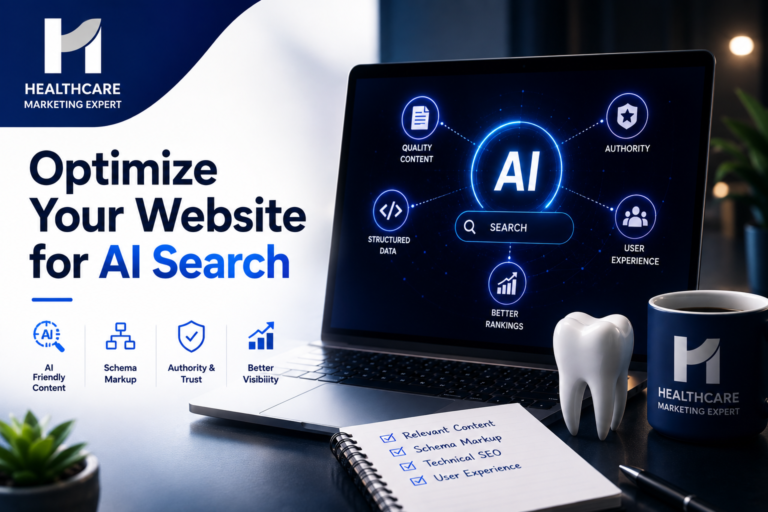
To optimize a website for AI search engines, you must write clear, well-structured content, add schema markup, build topic authority, and show real expertise. AI tools like ChatGPT, Perplexity, and Google AI Overviews scan your site for trust signals and clear answers. Simple, honest, well-organized content gets found and cited most often.
AI search is changing how people find information online. Instead of scrolling through blue links, users now ask AI tools direct questions. So, your website must speak clearly to both humans and machines. This guide shows you exactly how to optimize your site for AI search engines in 2026.
What Is AI Search Engine Optimization?
AI search engine optimization, often called AEO or GEO, is the process of making your website easy for AI tools to read, understand, and quote. Unlike old-school SEO, which focused on keywords, AI optimization focuses on clarity and trust. Simply put, you want AI tools to see your page as a reliable answer to a real question.
You may also hear this called Answer Engine Optimization or Generative Engine Optimization. Both terms describe the same goal. In each case, the aim is to help AI tools find, trust, and repeat your content when someone asks a related question.
How Does AI Search Work, and Why Does It Matter?
AI search tools work differently than traditional search engines. First, they read your content in full, not just your title tag. Next, they check if your page answers the question clearly. Then, they compare your content against other trusted sources. Finally, they choose the best answer to summarize or quote.
Because of this, your website needs more than good keywords. It needs real substance. AI models look for these signals:
- Clear structure with headings that match real questions
- Direct answers near the top of the page
- Facts, not opinions or empty claims
- Trust signals like author names and updated dates
- Content that matches what other trusted sources also say
As a result, businesses in Dubai and across the UAE that focus on clarity and trust tend to show up more often in AI answers. Meanwhile, sites with thin or repetitive content often get skipped entirely.
This matters because AI search is growing fast. More people now ask ChatGPT, Gemini, or Google AI Overviews a question instead of typing a short search term. Therefore, if your website only chases old-style keywords, you may miss this growing group of users. Additionally, AI tools tend to trust websites that other trusted sites also link to or mention. So, building a strong reputation online helps just as much as writing good content.
Step-by-Step Guide to Optimize Your Website for AI Search
Follow these steps to make your website AI search ready.
Step 1: Answer the question first. Start every page with a short, direct answer. Do not bury the answer under long introductions. Instead, place your main point in the first two sentences. This helps AI tools quote you fast.
Step 2: Use clear headings. Break your content into sections with simple headings. Write headings as real questions, such as “What is AI search?” or “How does it work?” This matches how people actually talk to AI tools.
Step 3: Add schema markup. Schema markup is code that tells search engines what your content means. Add FAQ schema, Article schema, and Organization schema to your pages. As a result, AI tools can read your page more accurately.
Step 4: Show real expertise. List your author’s name and background on every article. Share real experience, not just general facts. This builds trust with both readers and AI systems.
Step 5: Keep your content fresh. Update old pages often. Remove outdated facts and add new information. AI tools favor pages that stay current and accurate.
Step 6: Build topic clusters. Link related articles together. For example, connect a page about AI search to a page about local SEO or website design. This shows AI tools that your site has deep knowledge on the topic.
Step 7: Fix technical basics. Make sure your site loads fast. Also, check that your site works well on mobile phones. Slow or broken sites get ignored, even with great content.
Step 8: Write for humans first. Avoid stuffing keywords into your sentences. Instead, write the way you would explain something to a friend. AI tools reward natural, helpful language.
Step 9: Use lists and short paragraphs. Break large blocks of text into short paragraphs and bullet points. This makes your content easier to scan. In turn, AI tools can pull out key facts more easily.
Step 10: Track your results. Check which pages get cited or mentioned by AI tools over time. Then, improve the pages that perform well, and update the ones that do not. This ongoing process helps you stay visible as AI search keeps changing.
Key Benefits of AI Search Optimization
Optimizing your website for AI search brings real, lasting value. Here are the top benefits:
- More visibility. Your business appears in AI-generated answers, not just search results.
- Stronger trust. Clear, honest content builds credibility with both users and AI tools.
- Better traffic quality. People who find you through AI search often already trust your answer.
- Future-proof strategy. As more people use AI tools, early optimization keeps you ahead.
- Improved user experience. Clear structure also helps real visitors find answers faster.
- Lower marketing costs over time. Because AI citations do not require ad spend, strong content keeps working for you long after it is published.
- Stronger brand reputation. When AI tools consistently quote your business, people start to see your brand as a trusted expert in your field.
In short, AI search optimization is not just about machines. It also makes your website better for real people.
Overall, businesses that invest in this strategy today will likely see stronger, longer-lasting results tomorrow. Because AI search is still growing, early action gives you an edge over competitors who wait too long to adapt.
Frequently Asked Questions
What is the difference between SEO and AI search optimization?
Traditional SEO focuses on keywords and backlinks. AI search optimization focuses on clarity, structure, and trust. However, both still share the same goal: helping the right people find useful answers.
Do I need schema markup for AI search?
Yes, schema markup helps AI tools understand your content faster. It acts like a map that explains what each part of your page means.
How long does it take to see results from AI search optimization?
Results can appear within a few weeks. However, full results often take a few months, since AI tools need time to crawl and trust your updated content.
Can small businesses in Dubai benefit from AI search optimization?
Yes, absolutely. Local businesses that answer real customer questions clearly often perform very well in AI search results, even against larger competitors.
Should I stop using traditional SEO?
No. Traditional SEO and AI search optimization work together. Strong technical SEO still supports how well AI tools can find and read your site.
What is llms.txt, and do I need one?
An llms.txt file is a simple text file that points AI tools to your most valuable content. It is not required yet, but it can help AI crawlers understand your site faster.
Does content length affect AI search visibility?
Not directly. Instead, clarity and completeness matter more than length. A short page that fully answers a question often performs better than a long page full of filler.
Ready to Get Found by AI Search?
AI search is here to stay, and your website needs to keep up. If you want expert help optimizing your site for AI search engines, Healthcare Marketing Expert can guide you every step of the way. Our team builds clear, trustworthy content that both people and AI tools love to find. Contact Healthcare Marketing Expert today to start growing your visibility in AI search results.